- English
- Español
- Português
- русский
- Français
- 日本語
- Deutsch
- tiếng Việt
- Italiano
- Nederlands
- ภาษาไทย
- Polski
- 한국어
- Svenska
- magyar
- Malay
- বাংলা ভাষার
- Dansk
- Suomi
- हिन्दी
- Pilipino
- Türkçe
- Gaeilge
- العربية
- Indonesia
- Norsk
- تمل
- český
- ελληνικά
- український
- Javanese
- فارسی
- தமிழ்
- తెలుగు
- नेपाली
- Burmese
- български
- ລາວ
- Latine
- Қазақша
- Euskal
- Azərbaycan
- Slovenský jazyk
- Македонски
- Lietuvos
- Eesti Keel
- Română
- Slovenski
- मराठी
- Srpski језик

How Does an Integrated Stepper Motor Work?
Summary: Integrated stepper motors are transforming motion control across industries by combining motor, driver, and controller into a compact unit. This article explores their working principle, advantages, applications, selection tips, and maintenance strategies to help engineers and buyers make informed decisions. With a focus on innovation from LICHUAN®, you’ll gain practical insights into choosing the right integrated stepper motor for your application.
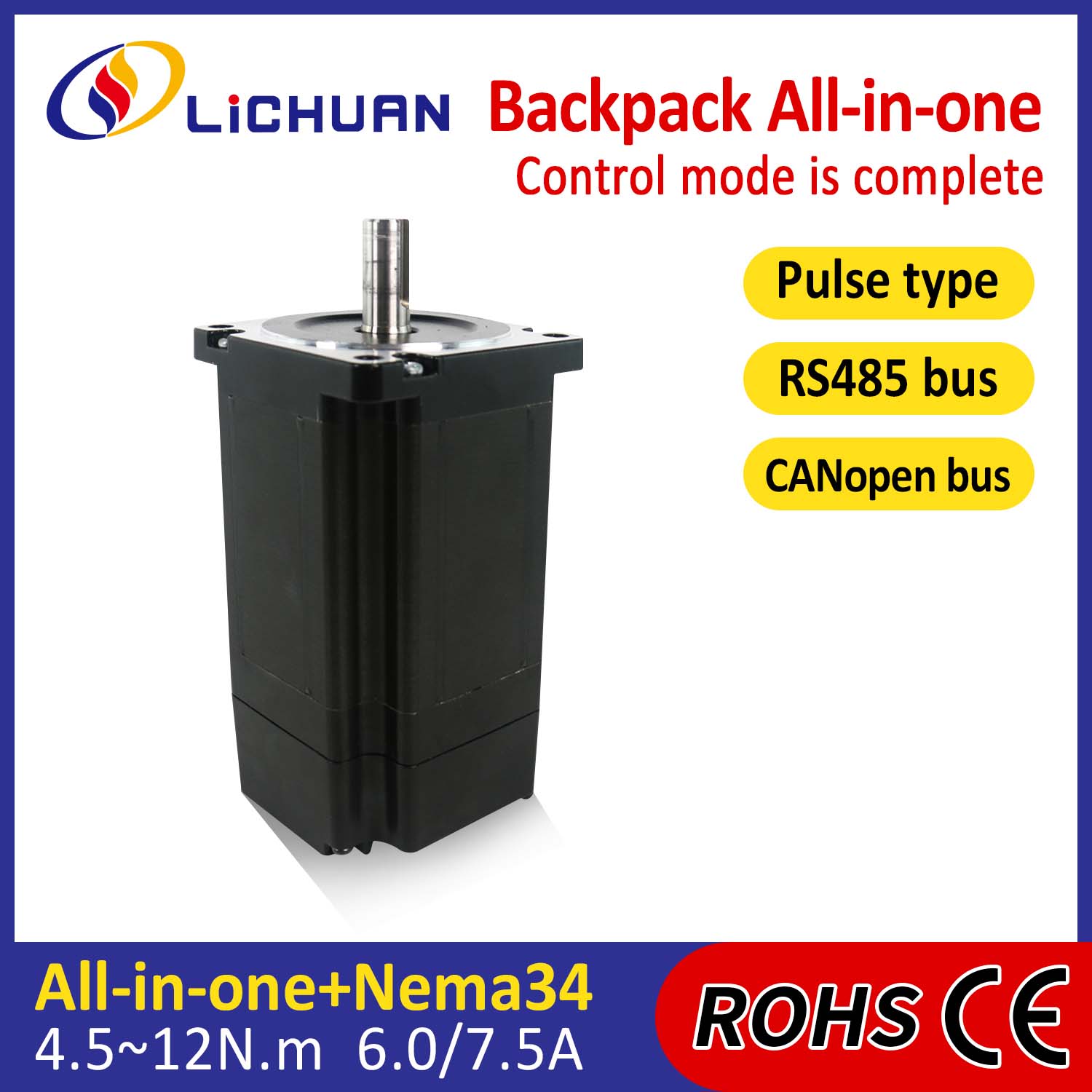
Table of Contents
- Introduction to Integrated Stepper Motors
- Working Principle
- Key Advantages
- Applications Across Industries
- Selection Tips
- Maintenance and Troubleshooting
- Frequently Asked Questions
- Contact LICHUAN®
Introduction to Integrated Stepper Motors
Integrated stepper motors combine the stepper motor, driver electronics, and controller into a single compact unit. Unlike traditional setups, which require separate drivers and complex wiring, integrated solutions simplify installation, reduce system footprint, and enhance reliability.
LICHUAN® has pioneered several integrated stepper motor designs that provide high precision, energy efficiency, and flexible control options, making them ideal for modern automation, robotics, and CNC systems.
Working Principle
Integrated stepper motors operate on the principle of converting digital pulse signals into precise rotational motion. Key components include:
- Rotor: Permanent magnet or variable reluctance type, providing magnetic poles for stepping.
- Stator: Multiple electromagnet windings that receive pulse signals from the integrated controller.
- Driver: Internal electronics manage current and voltage to achieve precise stepping.
- Controller: Receives commands from the host system and generates pulse sequences.
When a pulse is received, the controller energizes the stator windings in sequence, causing the rotor to rotate in fixed increments. Integrated designs reduce wiring errors, simplify signal routing, and allow for more compact assemblies.
Key Advantages
Integrated stepper motors offer several benefits over traditional stepper motor systems:
| Advantage | Description |
|---|---|
| Compact Design | Combines motor, driver, and controller in a single unit, saving space. |
| Ease of Installation | Reduces wiring complexity and eliminates separate driver configuration. |
| High Precision | Built-in controller ensures accurate step resolution and smooth operation. |
| Reduced Electromagnetic Interference | Integrated electronics are optimized for minimal EMI and noise. |
| Enhanced Reliability | Fewer external connections and standardized modules improve durability. |
Applications Across Industries
Integrated stepper motors are used widely in industries requiring precise motion control:
- 3D Printing: High accuracy for printing layers and complex geometries.
- Robotics: Compact size allows for agile robotic arms and mobile robots.
- CNC Machines: Reliable step control ensures precise cutting and engraving.
- Medical Devices: Pumps, scanners, and positioning systems benefit from accurate motion.
- Automated Packaging: Synchronization of conveyors and labeling equipment.
Selection Tips
Choosing the right integrated stepper motor involves evaluating several factors:
- Torque Requirements: Ensure the motor can handle the load at desired speeds.
- Step Resolution: Higher resolution improves precision but may require slower maximum speeds.
- Power Supply Compatibility: Confirm voltage and current ratings match your system.
- Environmental Conditions: Check temperature, humidity, and vibration tolerances.
- Control Interface: Choose a motor with compatible communication protocols (e.g., PWM, Step/Dir, Modbus).
LICHUAN® offers a range of integrated stepper motors with customizable specifications to suit these requirements. Visit our product page for detailed options.
Maintenance and Troubleshooting
Integrated stepper motors are low-maintenance, but regular checks improve longevity:
- Keep the motor clean and free from dust or debris.
- Ensure proper ventilation to prevent overheating.
- Check for unusual noises or vibrations during operation.
- Verify pulse signals and wiring connections periodically.
Common troubleshooting issues include:
| Issue | Possible Cause | Solution |
|---|---|---|
| Motor skipping steps | Excessive load or insufficient voltage | Reduce load or adjust power supply |
| Overheating | Poor ventilation or overcurrent | Improve cooling and check current settings |
| No motion | Incorrect wiring or controller fault | Verify connections and test controller |
Frequently Asked Questions
Q1: What is the difference between an integrated and a traditional stepper motor?
A: Integrated stepper motors combine the driver and controller inside the motor, reducing wiring complexity and improving precision. Traditional motors require external drivers and controllers.
Q2: Can I control an integrated stepper motor with a standard microcontroller?
A: Yes. Most integrated stepper motors support common interfaces such as Step/Dir, PWM, or serial communication, compatible with popular microcontrollers.
Q3: How do I choose the correct torque rating?
A: Consider the mechanical load, friction, and speed requirements. LICHUAN® provides torque charts and calculators to match your application.
Contact LICHUAN®
If you’re ready to optimize your automation or motion control system with high-performance integrated stepper motors, contact us today. Our experts at LICHUAN® will help you select the right solution for your specific requirements. Visit our product page for detailed specifications and inquiries.